By Sheldon, Gettel & Dahl
The garage is one of the most underutilized spaces in any home, and it’s also one of the most telling. When you walk into an organized garage, you immediately sense that the whole house runs smoothly. If you walk into a pile of holiday decorations, mismatched tools, and forgotten sports equipment, however, the opposite rings true. Whether you use your garage for parking, a workshop, or simply storage, transforming it into an organized, functional space pays off in ways that go well beyond aesthetics.
Here's the thing: most garages don't become chaotic overnight. They accumulate clutter slowly, through years of "I'll deal with that later" and items that don't have a permanent home anywhere else. The good news is that getting your garage under control is entirely achievable with the right approach and a solid system. You don't need a contractor, a massive budget, or an entire weekend to make real progress; a few focused hours and some thoughtful planning can produce results that last.
Key Takeaways
- Starting with a complete purge before organizing prevents the common mistake of reorganizing clutter rather than eliminating it.
- Vertical wall space is the most underutilized asset in the average garage and can dramatically increase storage capacity.
- Categorizing items by use frequency determines where and how they should be stored.
- Labeling and maintaining zones over time is what separates a one-time cleanout from a permanently organized space.
- A well-organized garage adds real perceived value to your home, especially for buyers who prioritize functionality.
Start With a Full Purge Before You Plan Anything
The most common organizing misstep is trying to build a system around everything you already own, including the items you no longer need. Before you buy a single storage bin or mount a single shelf, everything in your garage needs to come out.
Spread items out on your driveway or lawn so that you can see what you actually have. Most people are surprised by the volume of duplicates, broken tools, and items that were meant to be donated years ago. This step is not optional; it is the foundation of every other decision you will make. You cannot create an effective storage system without first knowing exactly what needs to be stored.
Divide everything into four categories: keep, donate, trash, and relocate. That last category matters more than people realize. Many garages become storage overflow for items that logically belong somewhere else in the house. Relocating those items to appropriate indoor storage frees up considerable garage real estate before you have even picked up a shelf bracket.
Spread items out on your driveway or lawn so that you can see what you actually have. Most people are surprised by the volume of duplicates, broken tools, and items that were meant to be donated years ago. This step is not optional; it is the foundation of every other decision you will make. You cannot create an effective storage system without first knowing exactly what needs to be stored.
Divide everything into four categories: keep, donate, trash, and relocate. That last category matters more than people realize. Many garages become storage overflow for items that logically belong somewhere else in the house. Relocating those items to appropriate indoor storage frees up considerable garage real estate before you have even picked up a shelf bracket.
What to Ask Before You Keep Something
- Does this item serve a purpose you use at least once a year?
- Is it in working condition, or has it been broken and waiting for a repair that isn't coming?
- Do you already own a functioning version of this item somewhere else in the house?
- Would it cost less to replace it later than it costs you in storage space to keep it now?
- Is it something a neighbor, friend, or organization could use?
Use Zones to Create a Logic-Driven Layout
Once you know what you're keeping, it's time to assign everything a permanent home based on how and how often you use it. Zoning is the principle behind every professionally organized garage. Rather than storing items randomly, you group them by category and position those categories according to frequency of use and physical practicality.
High-frequency items, such as everyday tools, car supplies, and sports equipment used weekly, should be stored at eye level and within easy reach near the garage door. Seasonal items, such as holiday decorations, camping gear, or patio accessories you only access a few times a year, belong higher up or in harder-to-reach corners. Items that you rarely use but can't bring yourself to discard should be boxed, labeled clearly, and placed on overhead platforms where they're out of the way entirely.
Zone logic also helps you group by activity. A dedicated garden zone keeps soil, gloves, pots, and tools in one area. A sports zone for bikes, balls, and helmets keeps that gear together. A workshop zone near an outlet and proper lighting keeps your tools and workbench in productive proximity. These zones create visual order and, more importantly, they make the space easier to use on a daily basis.
High-frequency items, such as everyday tools, car supplies, and sports equipment used weekly, should be stored at eye level and within easy reach near the garage door. Seasonal items, such as holiday decorations, camping gear, or patio accessories you only access a few times a year, belong higher up or in harder-to-reach corners. Items that you rarely use but can't bring yourself to discard should be boxed, labeled clearly, and placed on overhead platforms where they're out of the way entirely.
Zone logic also helps you group by activity. A dedicated garden zone keeps soil, gloves, pots, and tools in one area. A sports zone for bikes, balls, and helmets keeps that gear together. A workshop zone near an outlet and proper lighting keeps your tools and workbench in productive proximity. These zones create visual order and, more importantly, they make the space easier to use on a daily basis.
Common Zones to Consider for Most Garages
- A garden and yard care zone near the door to the backyard or exterior, including long-handled tools on wall hooks.
- A sports and recreation zone with vertical bike hooks, ball storage, and a rack for helmets and pads.
- A workshop or tool zone near a workbench with pegboard for hand tools and labeled drawers for hardware.
- An automotive zone for car care products, jumper cables, and fluids, stored low and near the vehicle.
- An overhead storage zone for seasonal items, luggage, and infrequently used bins with clear labels facing outward.
Go Vertical: Wall and Ceiling Storage Changes Everything
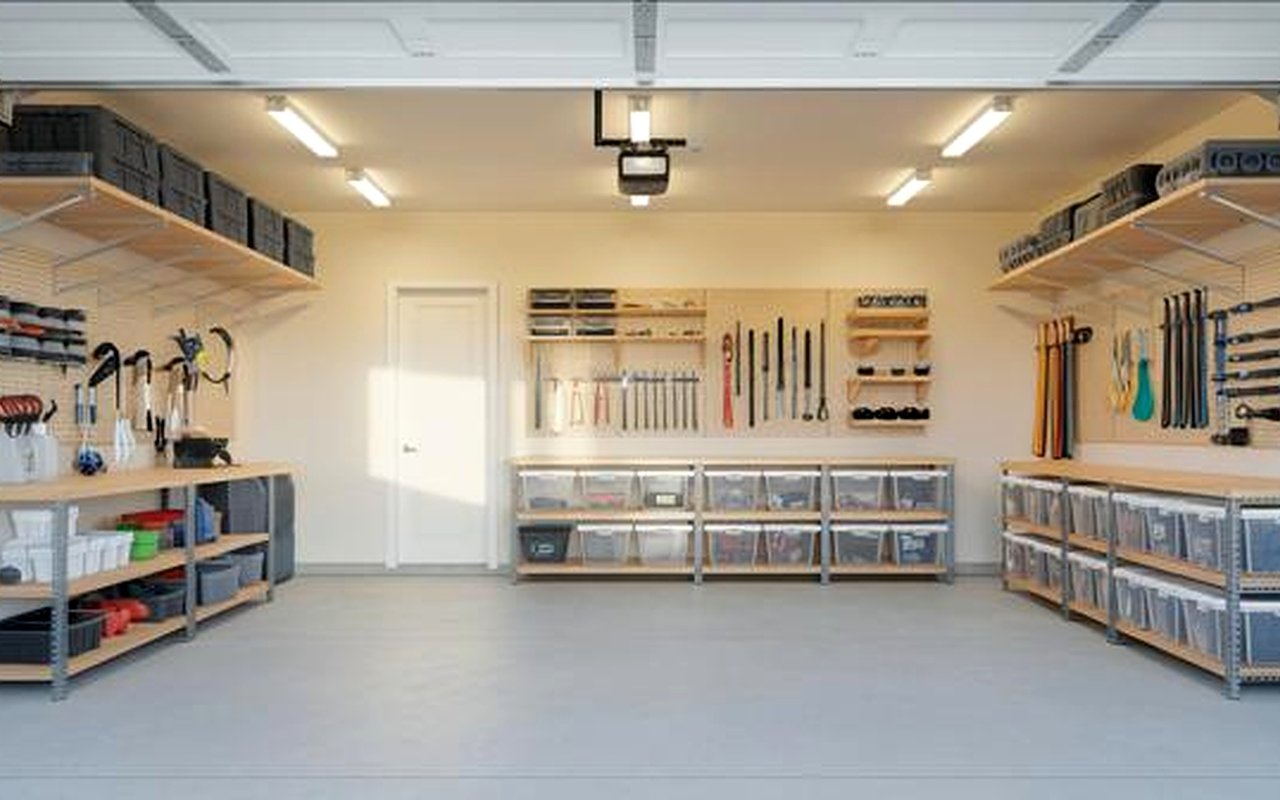
The floor of your garage is premium real estate. The walls and ceiling are where the real storage potential lives, and most homeowners leave both almost entirely untapped. Installing wall-mounted shelving, pegboards, slatwall systems, or track-based organizers transforms bare walls into organized, functional storage that gets items off the floor and into logical positions.
Pegboard is especially versatile in workshop areas because it lets you hang tools by shape and size, see everything at a glance, and reconfigure as your needs change. Slatwall systems offer similar flexibility with a cleaner visual finish and can accommodate hooks, bins, and shelves interchangeably. For heavier storage, steel shelving units bolted to studs provide the load-bearing capacity for bins, paint cans, and power tools.
Overhead ceiling storage platforms deserve particular attention for items that are large and seasonal. Mounted platforms above the car parking area can hold bins of holiday décor, camping equipment, or off-season sporting gear without consuming any floor or wall space. When installed properly with appropriate weight ratings, overhead storage is one of the best returns on investment in a garage organization project.
Pegboard is especially versatile in workshop areas because it lets you hang tools by shape and size, see everything at a glance, and reconfigure as your needs change. Slatwall systems offer similar flexibility with a cleaner visual finish and can accommodate hooks, bins, and shelves interchangeably. For heavier storage, steel shelving units bolted to studs provide the load-bearing capacity for bins, paint cans, and power tools.
Overhead ceiling storage platforms deserve particular attention for items that are large and seasonal. Mounted platforms above the car parking area can hold bins of holiday décor, camping equipment, or off-season sporting gear without consuming any floor or wall space. When installed properly with appropriate weight ratings, overhead storage is one of the best returns on investment in a garage organization project.
Vertical Storage Options Worth Knowing
- Wall-mounted steel shelving, adjustable and load-bearing, for heavy bins and equipment.
- Pegboard panels, ideal for workshop areas with tools of varying sizes and shapes.
- Slatwall systems with interchangeable accessories, great for a polished finish and flexible storage.
- Bike hooks and vertical bike stands, which free up significant floor space without adding bulk.
- Ceiling-mounted storage platforms, best for large, lightweight seasonal bins.
FAQs
How Long Does It Take to Organize a Two-Car Garage?
Most two-car garages can be purged, zoned, and reorganized over the course of a weekend, with one day focused on the purge and layout planning and a second day on installing storage and placing items into zones. Larger garages or those with significant accumulation may take longer. Starting with a clear plan in place before you begin prevents the common trap of rearranging items without making real progress.
What's the Best Storage System for a Small Garage?
In a smaller garage, maximizing vertical space is the most effective strategy. Wall-mounted shelving, slatwall panels, and ceiling platforms allow you to store a significant volume of items without consuming floor space. Freestanding shelving units should be used sparingly or positioned against walls rather than placed in the center of the space. Clear, labeled bins keep small items visible and accessible without the need to dig through stacks.
Do Garage Improvements Add Value to a Home?
A well-organized, functional garage does contribute to a home's appeal, particularly for buyers who prioritize practical living spaces. While it may not add dollar-for-dollar appraised value in the same way a kitchen renovation might, a clean, organized garage creates a strong impression that the home has been well-maintained. For sellers, it's one of the lower-cost improvements with a visible impact on how buyers perceive the property.
How Do I Keep the Garage Floor Clean and Protected?
Epoxy or polyurea floor coatings are the most durable options for protecting garage floors from stains, moisture, and wear. Interlocking floor tiles offer a DIY-friendly alternative that can be installed without special equipment. Both options make the floor easier to clean and add a finished look that makes the overall space feel more intentional and well-kept.
A Garage That Works for Your Needs
An organized garage does more than create storage; it changes how you use your home. When tools are easy to find, gear has a place, and the car can actually fit inside, the garage becomes an asset rather than an afterthought.
If you're thinking about listing your home in Sarasota and want to understand which updates tend to resonate with buyers in your market, our team is here to help. Reach out to Sheldon, Gettel & Dahl to talk through what buyers are looking for and how to position your home at its best.
If you're thinking about listing your home in Sarasota and want to understand which updates tend to resonate with buyers in your market, our team is here to help. Reach out to Sheldon, Gettel & Dahl to talk through what buyers are looking for and how to position your home at its best.